Why Southwest Florida Homeowners Should Stay Roof-Ready All Season
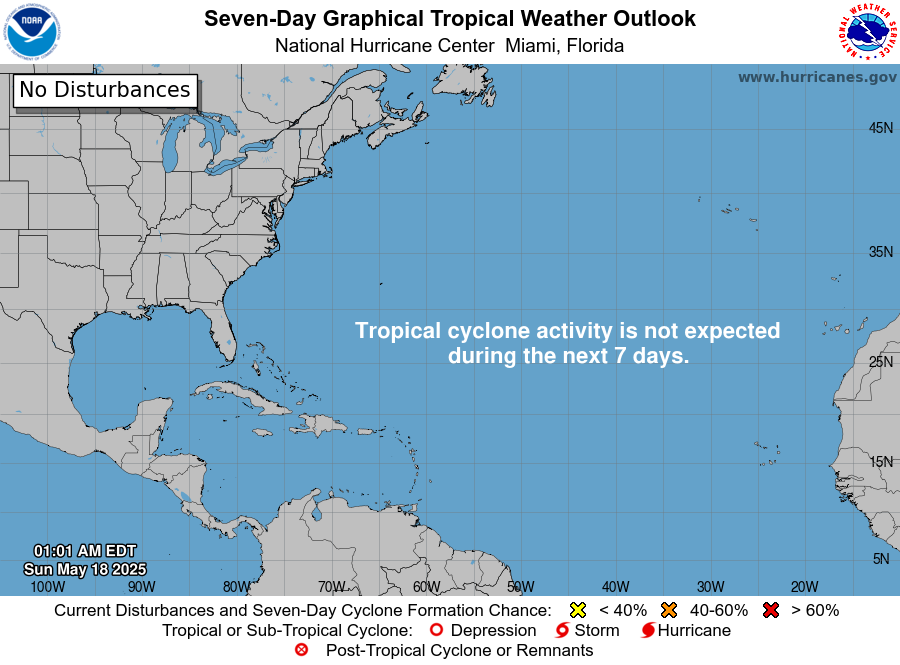
As of the National Hurricane Center's Tropical Weather Outlook issued at 2:00 PM EDT, Monday, October 5, 2026, there are no tropical cyclones in the Atlantic basin. NHC is monitoring a disturbance in the southwestern Gulf of America, designated AL92. In that outlook, NHC says a tropical depression is expected to form during the middle portion of the week, gives the system a 60 percent chance of formation through 48 hours and an 80 percent chance through 7 days, and expects it to drift eastward over the next couple of days before turning northward. NHC states it is too early to determine specific impacts to the northern Gulf Coast. The outlook does not name specific impacts for Southwest Florida.
Forecasts change, sometimes quickly. For the latest official information, check the National Hurricane Center directly and follow guidance from Charlotte County and your local officials.
Image: National Hurricane Center Atlantic 7-day Graphical Tropical Weather Outlook (public domain). Always check nhc.noaa.gov for the latest.

Image: NOAA/NESDIS GOES satellite GeoColor view of the Gulf of America (public domain). For a Florida-friendly tracking hub that many Southwest Florida homeowners already trust, see Mike's Weather Page (Mike Boylan), and still treat the National Hurricane Center as the official forecast source.
For those of us in Punta Gorda and across Southwest Florida, a system like this is a good, calm reminder of something worth doing every year: getting your roof ready before storm season reaches its busiest stretch.
Why Being Roof-Ready Ahead of Peak Season Matters
The Atlantic hurricane season runs from June 1 through November 30. According to NHC, the season peaks around September 10, with most activity occurring between mid-August and mid-October. We are still inside that window today, and the season continues through the end of November.
When a storm is already in the forecast, everyone is trying to get the same things done at once. Roofers' schedules fill, supply runs get busy, and there is less time to fix small problems. Taking care of your roof earlier in the year, when skies are calm, means small issues get handled while they are still small, and you are not making decisions under pressure.
A Practical Pre-Storm Roof Checklist
You can do most of this from the ground. If something needs a ladder or a closer look, that is a job for a licensed roofer.
- Look for loose, cracked, or missing shingles or tiles. Walk around your home and scan each roof slope. On concrete tile roofs, common across Punta Gorda Isles (PGI) and Burnt Store Isles, watch for cracked, slipped, or displaced tiles. On shingle roofs, look for lifted edges or bare spots.
- Check the flashing. Flashing is the metal that seals the roof around chimneys, vents, skylights, and walls. Look for pieces that are bent, lifted, rusted, or pulling away. On canal and waterfront homes, salt air can speed up corrosion, so flashing deserves an extra look.
- Clear gutters and downspouts. Make sure they are free of leaves and debris, firmly attached, and directing water away from the house. Ready.gov recommends de-cluttering drains and gutters as part of strengthening your home.
- Trim branches away from the roof. Branches that hang over the roof can scrape it or break off in high winds. Plan trimming well ahead of any storm, not in the last day or two, when there may be no way to haul debris away. For large trees or limbs near power lines, call a professional.
- Secure outdoor items. Patio furniture, potted plants, grills, and lanai decor can be picked up by strong winds. Know where each item will go if a storm approaches. Ready.gov advises bringing outside furniture in.
- Take photos of your roof now, for your records. From the ground, photograph each side of the house and roof, plus any areas you are keeping an eye on. Save them with the date. A simple baseline helps you and your roofer see what has changed later.
- Keep a licensed roofer's number handy. Save it in your phone and write it down somewhere you can find it if the power is out. You can verify any Florida contractor's license on the DBPR website at myfloridalicense.com.
After the Storm: Safety First
Once a storm has passed, it is natural to want to check on your home right away. Please do it safely.
- Stay off the roof. After a storm, roofs can be wet, slippery, strewn with debris, or weakened in ways you cannot see. Downed power lines may be nearby. Look from the ground and note anything that seems out of place.
- Call a licensed Florida roofing contractor. A licensed roofer has the equipment and training to inspect a roof safely and tell you what it needs. Before hiring anyone, verify the license on the DBPR website.
- Skip the DIY on a damaged roof. Climbing onto or patching a roof that may be compromised puts you at risk of a fall and can make the problem worse. Leave repairs, including temporary ones, to a professional.
The CDC also advises staying out of damaged buildings until local authorities say they are safe, and keeping clear of downed power lines.
Calm, Local Help From Shea Roofing
Shea Roofing LLC is based in Punta Gorda and serves homeowners across Southwest Florida, from Naples up through Sarasota, including Fort Myers and Port Charlotte. We have been roofing for over 20 years and are a certified contractor with multiple manufacturers, working on tile, metal, shingle, and flat roofs.
Whether you would like a pre-season roof check or need someone to look at your roof after a storm, we are glad to help. We will tell you plainly what we see and what, if anything, needs attention.
Learn more about our emergency roof repair service, our work on tile roofs in Punta Gorda, or the areas we serve, including Port Charlotte, Fort Myers, and Naples.
Frequently Asked Questions
When is hurricane season in Florida, and when does it peak?
The Atlantic hurricane season runs from June 1 through November 30, according to the National Hurricane Center. NHC notes that the peak is around September 10, with most activity occurring between mid-August and mid-October, so it makes sense to have your roof checked before that stretch begins.
What should I check on my roof before a storm?
From the ground, look for loose, cracked, or missing shingles or tiles, lifted or rusted flashing, and clogged or loose gutters and downspouts. Trim branches that hang over the roof well ahead of time, secure outdoor items, take dated photos of your roof for your records, and keep a licensed roofer's number handy. Leave anything that requires climbing to a professional.
Should I go on my roof after a hurricane to check it?
No. Stay off the roof after a storm. Wet, debris-strewn, or weakened roofs are slippery and unstable, and downed power lines may be nearby. Look from the ground, note anything unusual, and call a licensed Florida roofing contractor to inspect it safely.
How can I check that a Florida roofing contractor is licensed?
Search the contractor's name or license number on the Florida Department of Business and Professional Regulation (DBPR) license lookup at myfloridalicense.com before you hire or sign anything. Roofing work in Florida must be done by a properly licensed contractor.
Ready When You Are
If you would like a second set of eyes on your roof, give us a call. No pressure, just straight answers from a local team.
Shea Roofing LLC
6025 Taylor Rd, Suite #107, Punta Gorda, FL 33950
(239) 744-6082
Florida License CCC1334196
