Roof Replacement in Punta Gorda Isles
Shea Roofing LLC is a family-owned roofing company and a Florida Certified Roofing Contractor, license CCC1334196, licensed and insured, with our office at 6025 Taylor Rd #107 in Punta Gorda. Tile is the roof we replace most often in Punta Gorda Isles. This page is only about replacing a roof in the Isles: what the canals, the salt air, the City's overlay rules and the code change on December 31, 2026 mean for your new roof. For the rest of the city, see our Punta Gorda roofing page.
Why a Punta Gorda Isles reroof is its own kind of job
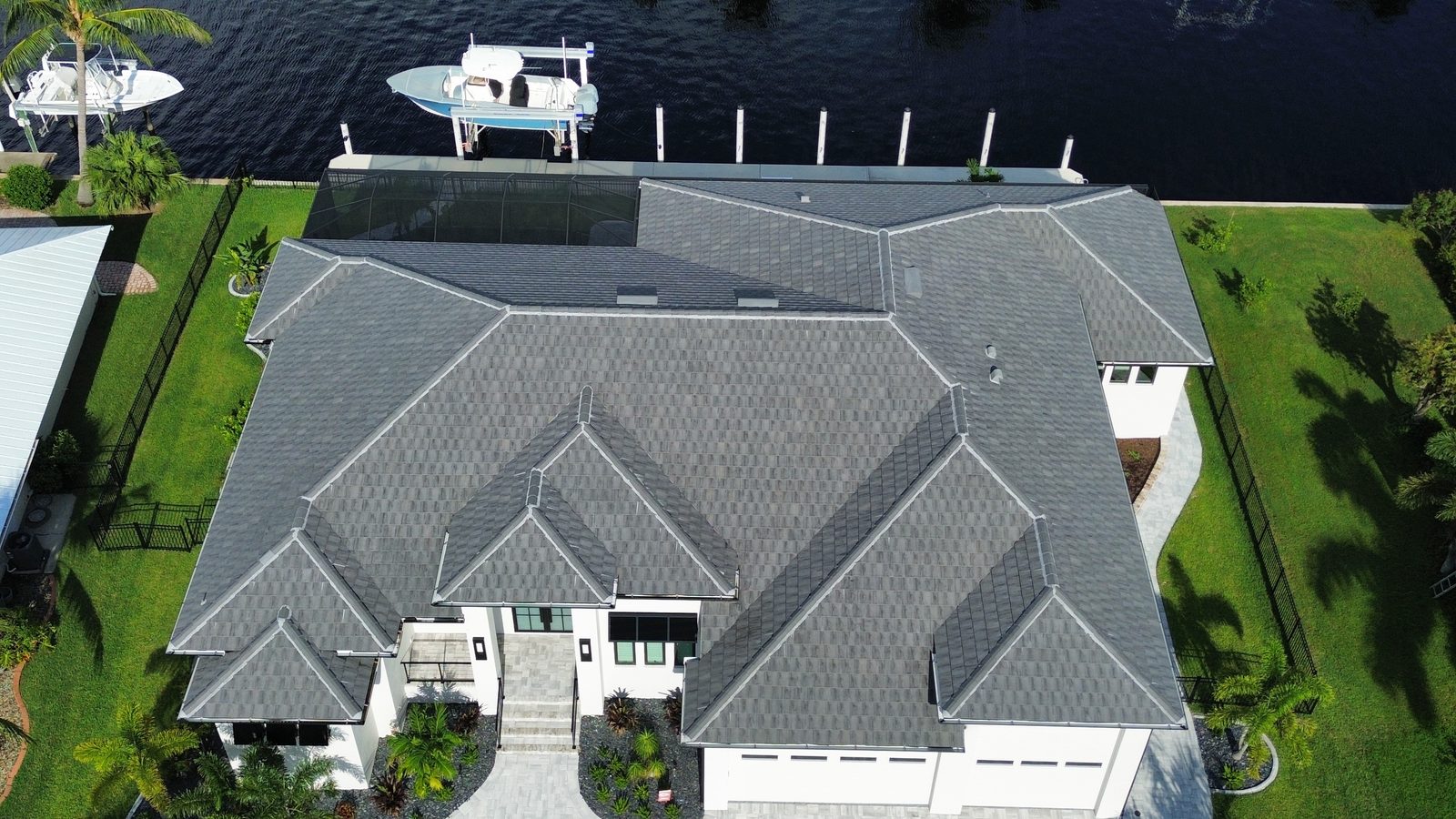
The City of Punta Gorda maintains about 45 miles of canals and 91 miles of seawall, and Punta Gorda Isles is one of its two canal maintenance districts. Most Isles homes back onto water. That one fact drives most of the decisions on a replacement:
- Open exposure. A canal or the harbor on one side means nothing slows the wind across the lot. Edge metal, hip and ridge attachment and tile fastening do the heavy lifting.
- Salt air. Fasteners, flashing, drip edge and valley metal near saltwater corrode faster than the same parts a few miles inland.
- A tight, valuable lot. Seawall, dock, lift, pool cage and lanai screen all sit within a few feet of the drip line, and there is usually one driveway for staging.
- Age. Many Isles homes were built or re-roofed decades ago, and tile underlayment usually wears out before the tile does.
Tile first: how we replace a tile roof in the Isles
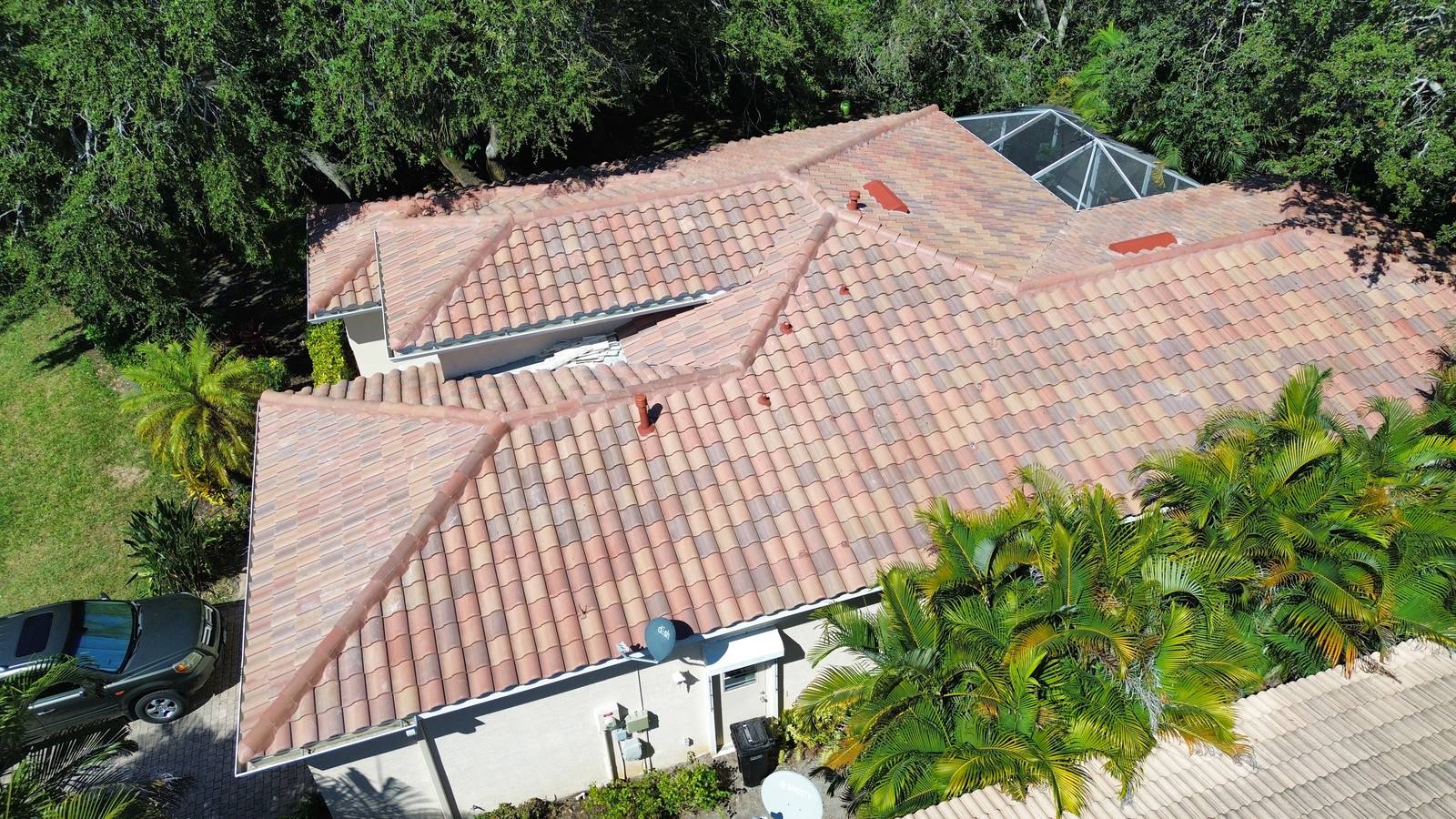
Concrete and clay tile are common across Punta Gorda Isles, and tile is the core of our work. A tile reroof here is not a tile swap. It is a full system, and the parts you do not see are the ones that fail first on a canal lot.
- Tear-off to the deck. We remove tile, battens where present, and the old underlayment, then inspect every sheet of decking and replace damaged wood before anything goes back on.
- Deck re-nailing to current code. The deck is fastened to the schedule the Florida Building Code requires for your design wind speed.
- Underlayment built for tile. The tile underlayment system follows the FRSA-TRI Florida High Wind Concrete and Clay Roof Tile Installation Manual, which sets out single-ply self-adhered and two-ply options.
- Corrosion-resistant metals. On canal homes we specify flashing, valley metal and fasteners for salt exposure before we order, not after the inspector asks.
- Tile attachment by product approval. Tile is set with the adhesive or mechanical attachment listed in its Florida product approval for your wind zone.
- Hip, ridge and edges. These are where wind starts peeling a roof. We treat them as the most important line items on the job.
If your tile roof may only need a repair, start with our tile roof repair page. For the full replacement process across the region, see tile roof replacement and tile roofing.
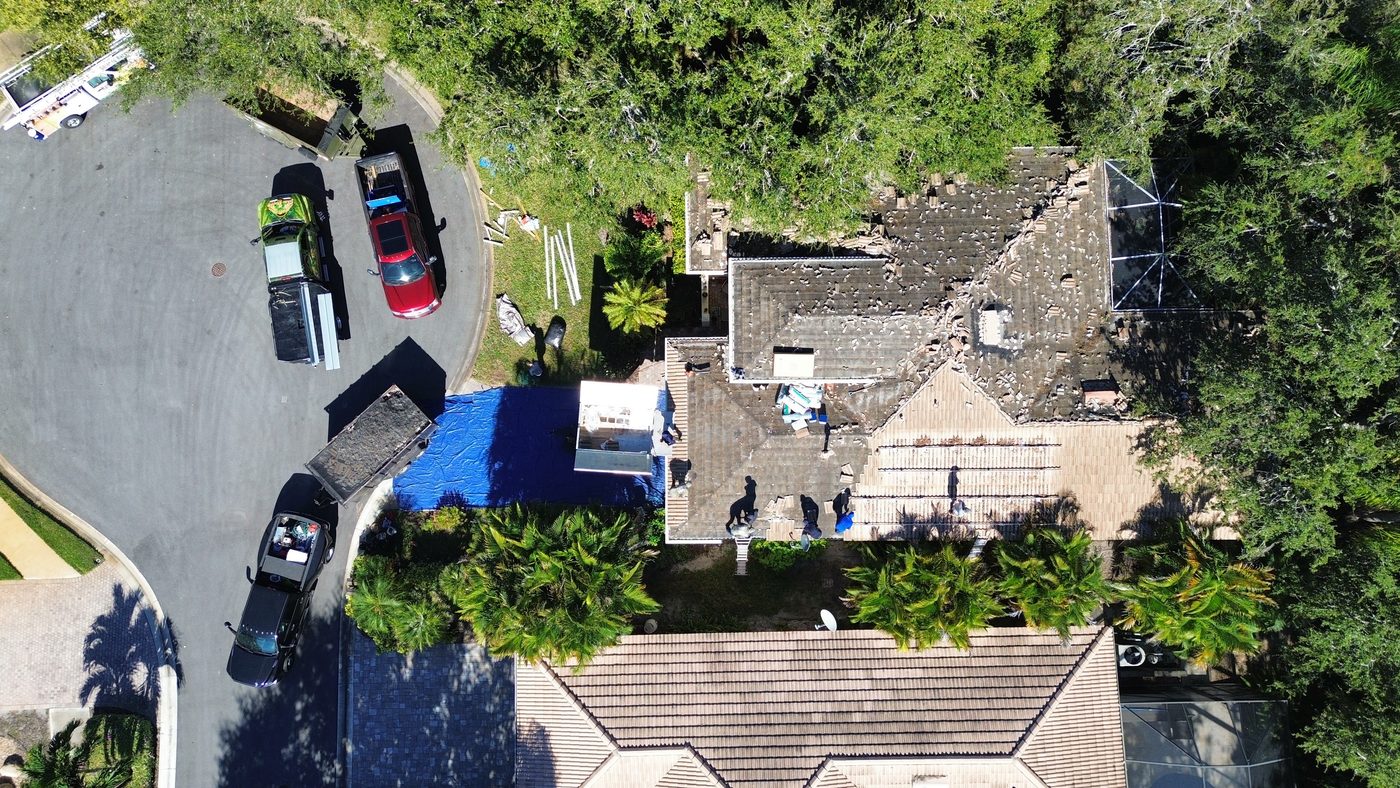
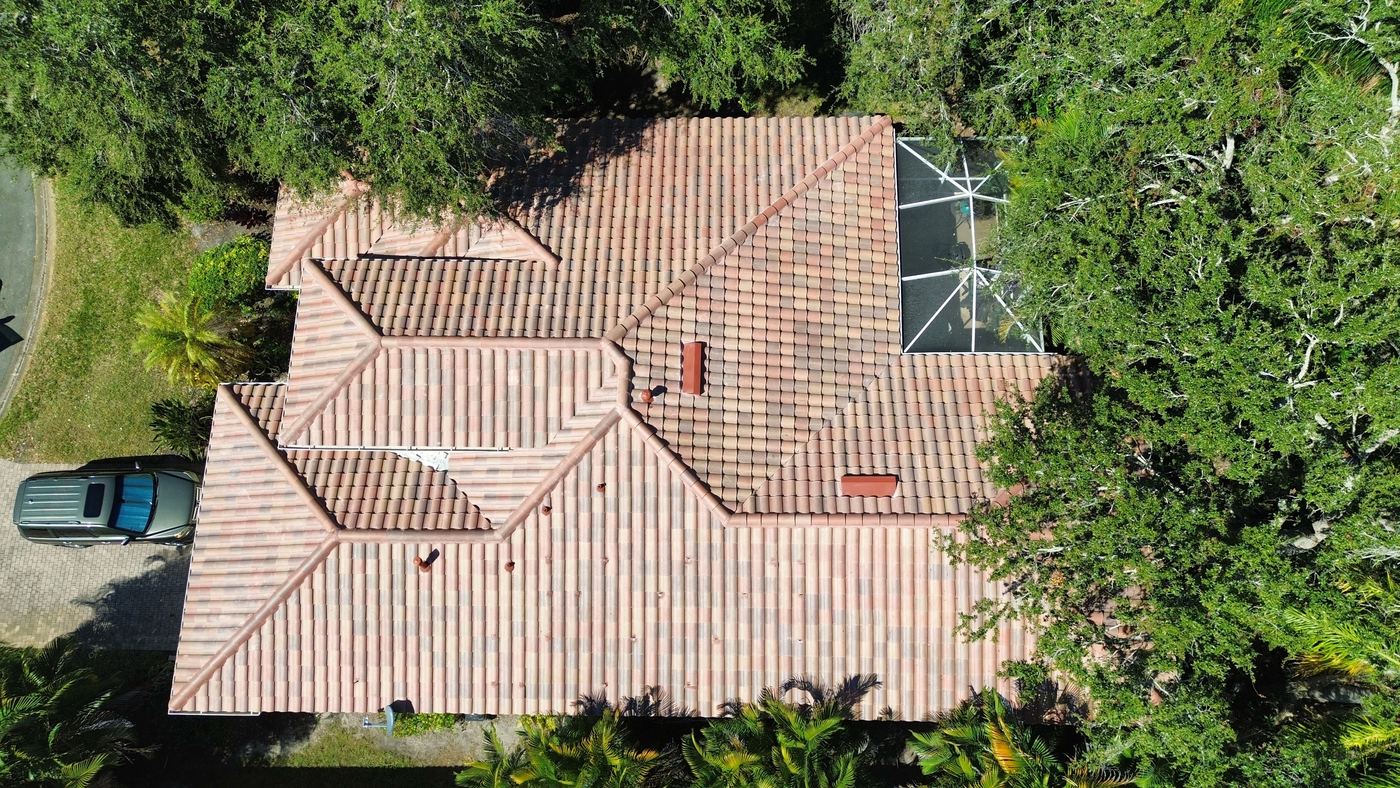
Before and after: a Punta Gorda Isles tile roof
The same Punta Gorda Isles home, photographed from above during tear-off and after the new clay tile roof was finished.
The new salt-air fastener rules (Florida Building Code, 9th Edition)
The 2026 Florida Building Code, 9th Edition, takes effect December 31, 2026. It adds a new section on corrosion resistance in saltwater environments. In plain terms, according to the Florida Building Commission's published code text and analysis of changes:
- Fasteners and metal connectors within 3,000 feet of a saltwater coastline must be corrosion resistant, either by composition (stainless steel or nonferrous metal) or by a specified coating or galvanizing level.
- The required level depends on distance and exposure. The table is strictest within 300 feet of the shoreline, where exposed exterior locations call for stainless steel.
- Smaller galvanized fasteners must meet a listed standard or a salt-spray test. For roof tile fasteners, the salt-spray option is no more than 5 percent red rust after 1,000 hours of the listed test.
- Fasteners used with metal connectors must be compatible with them, to prevent galvanic corrosion between dissimilar metals.
- Fasteners and connectors fully embedded in concrete or mortar are exempt.
What we do not know yet: the code says "saltwater coastline." The Florida Roofing and Sheet Metal Contractors Association has noted that whether a canal counts as coastline is not settled. Until the Commission or the City's building official says otherwise, we measure from your lot to the nearest saltwater and plan the fastener package as if the rule applies. We also confirm with the City which code edition applies to your permit date.
Rules in the Isles: the overlay district, not an HOA board
Punta Gorda Isles was sold as a deed-restricted community. According to the Punta Gorda Isles Civic Association, the original deed restrictions were not renewed in 1995. Instead, the community's standards were written into the City code as a Special Overlay District that the City enforces. That means a reroof in most of the Isles is governed by the City's code and permit review, not by a separate architectural committee.
Two exceptions to watch:
- Burnt Store Isles is legally Punta Gorda Isles Section 15, and its property owners' association still enforces deed restrictions. Owners need board approval before changing a home's exterior appearance, and the association accepts only tile or tile-look roofs, including metal that resembles tile with at least a one-inch nose. Shingles, flat metal and standing seam are not accepted there.
- Condo and villa associations inside the Isles have their own documents. We help prepare a submittal, but the decision belongs to the association. See HOA tile roofing.
Before we order material, we check your parcel's rules in writing so the color and profile you choose are the ones you can actually install.
Wind design for an Isles address
Punta Gorda is not in Florida's High-Velocity Hurricane Zone, which covers only Miami-Dade and Broward counties. Roofs here are designed to the statewide Florida Building Code wind maps. We look up the design wind speed for your exact address. Where it is 140 mph or more, the area is a wind-borne debris region, and Florida law can require roof-to-wall connection work as part of a reroof on qualifying homes. We tell you up front whether that applies to your house.
Storm history here is not abstract. The National Hurricane Center reports that Charley's eye crossed Punta Gorda on August 13, 2004, and that Ian's center made landfall near Punta Gorda on September 28, 2022. Roofs built to the current code are the ones designed for that kind of day.
Protecting a canal lot during a reroof
- We plan staging around one driveway and a narrow side yard, and agree on a drop zone before tear-off.
- Pool cages, lanai screens and the water side get protection before the first tile comes off.
- Debris is kept off the seawall, dock and canal. We run magnets across the lot each day.
- If you are out of state for the season, we send photos at each stage so you can follow the job from wherever you are.
Permits for Punta Gorda Isles
Punta Gorda Isles is inside city limits, so the City of Punta Gorda Building Division issues the roof permit. We pull it, record the Notice of Commencement when one is required, and schedule the inspections. If your mailing address says Punta Gorda but your parcel is outside the city, Charlotte County issues the permit instead. We check before we quote.
Punta Gorda Isles roof replacement questions
Do I need association approval to replace my roof in Punta Gorda Isles?
In most of the Isles, no separate architectural board reviews roofs. The old deed restrictions were replaced by a City overlay district in 1995, so the City's code and permit review apply. Burnt Store Isles (Section 15) is different: its association requires board approval and accepts only tile or tile-look roofs. Condo and villa associations have their own rules.
Do the new salt-air fastener rules apply to my canal home?
The 9th Edition Florida Building Code, effective December 31, 2026, applies the rules within 3,000 feet of a saltwater coastline. Whether a canal counts as coastline has not been settled. We plan canal homes as if the rule applies and confirm with the City's building official.
Is my Isles home in the High-Velocity Hurricane Zone?
No. That zone covers only Miami-Dade and Broward counties. Punta Gorda roofs follow the statewide wind maps, and we look up the design wind speed for your address.
Can I switch from tile to metal or shingle in Punta Gorda Isles?
Outside Burnt Store Isles, the City's overlay rules and your section's history decide that, so we check in writing for your parcel first. In Burnt Store Isles, only tile or tile-look roofs are accepted, including tile-look metal with at least a one-inch nose.
Who issues the roof permit in Punta Gorda Isles?
The City of Punta Gorda Building Division, because the Isles are inside city limits. We pull the permit and schedule the inspections.
Thinking about a new roof in Punta Gorda Isles? Call Evan at (239) 744-6082 or the office at (941) 207-7145. Shea Roofing LLC, 6025 Taylor Rd #107, Punta Gorda, FL. Family-owned, licensed and insured, CCC1334196.
Office: 6025 Taylor Rd. #107, Punta Gorda, FL 33950
Call (239) 744-6082 / (941) 207-7145
Email:info@shearoofingllc.com
License: CCC1334196
Schedule Your Free Roofing Consultation Today!
Ready to upgrade or repair your roof? Contact Shea Roofing LLC today for a free, no-obligation estimate!
We proudly serve homeowners and businesses throughout Charlotte, Lee, Collier, Sarasota, and Manatee counties
— including Punta Gorda, Fort Myers, Naples, Cape Coral, Sarasota, Bradenton, and more.